
London Tube Strikes: Eight 24-Hour Walkouts From 26 November to February in Four-Day Week Row

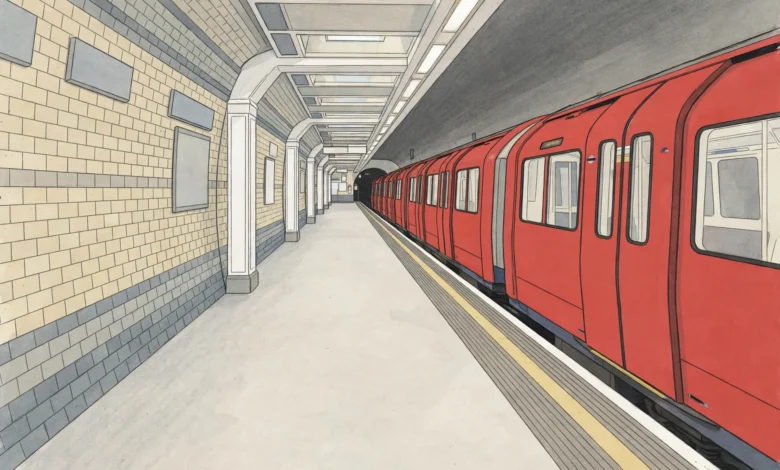
London Underground drivers are to stage eight 24-hour strikes between late November 2026 and February 2027, the Rail, Maritime and Transport union (RMT) has announced, in a long-running dispute over working arrangements. The first walkout begins at noon on Thursday 26 November, with further action planned through the Christmas period and into the new year.
The strikes will hit the capital at some of the busiest moments of the year, including the final shopping weekend before Christmas and the first working days of January. Transport for London (TfL) has not yet said what level of service it expects to run on the strike days.
Quick Reference Summary
| Detail | Confirmed position |
|---|---|
| Union calling the strikes | RMT (Rail, Maritime and Transport union) |
| Who is striking | London Underground drivers who are RMT members |
| Number of walkouts | Eight 24-hour strikes |
| First strike | Noon, Thursday 26 November 2026 to noon, Friday 27 November 2026 |
| Christmas-period strikes | Noon, Thursday 17 December and noon, Saturday 19 December 2026 |
| New Year strikes | Noon, Monday 4 January and noon, Wednesday 6 January 2027 |
| Final strikes | Noon, Wednesday 17 February; noon, Tuesday 23 February; noon, Thursday 25 February 2027 |
| Dispute | TfL plans for a four-day working week and a Trains Modernisation Framework |
| Other drivers’ union | Aslef has accepted the plan and will not strike |
| Announced | Friday 6 November 2026 |
Eight Walkouts Across Four Months
Each of the eight walkouts lasts 24 hours, running from noon on the announced date until noon the following day. The RMT confirmed the full list when it announced the action on Friday 6 November 2026, and the dates have been reported consistently across national and regional outlets since.
The timing puts three of the strikes squarely in the Christmas run-up. The walkouts on 17 and 19 December fall in the final week before Christmas, when shops, restaurants and theatres depend heavily on Tube travel. The strikes on 4 and 6 January land on the first working days of the new year, while the February dates extend the dispute into 2027.
About half of the drivers on the network are members of the RMT, according to the BBC, while many others are represented by Aslef. That split matters for passengers: with Aslef drivers not striking, some service may still run, but TfL has not yet confirmed how much.
The Four-Day Week at the Heart of the Row
At the centre of the dispute is TfL’s plan to introduce what it describes as a voluntary four-day working week for Tube drivers, alongside a new Trains Modernisation Framework. The RMT says the changes would mean drivers spending more time driving trains, working longer duties, and facing earlier starts and later finishes.
The union has also warned that the new rosters could bring short-notice changes to shifts and alter existing transfer and annual leave arrangements. It has raised concerns that the proposals could pave the way for hundreds of job cuts, pointing to initial rosters published for the Bakerloo line which it says indicate significant reductions in staffing.
RMT general secretary Eddie Dempsey accused London Underground of presenting the changes dishonestly. “London Underground is attempting to dress up a wholesale attack on drivers’ working conditions as a voluntary four-day week,” he said when the strikes were announced.
The RMT has opposed the proposals since at least March 2026, when it first announced strike action over what it described as an attempt to compress a normal working week into four days. The November announcement escalates a dispute that has now run for most of the year.
A Union Split: RMT Strikes While Aslef Holds Back
The dispute has exposed a public division between the two unions representing London Underground drivers. Aslef, the other train drivers’ union, has accepted TfL’s plan, and its drivers will not take part in the walkouts.
Finn Brennan, Aslef’s full-time organiser on London Underground, told the BBC he was surprised by the RMT’s decision. “We are surprised that the RMT has, once again, decided to take strike action to try to prevent Underground drivers moving to a four-day week on a voluntary basis,” he said.
Aslef argues that the switch would give Tube drivers an extra 35 days off a year, with rosters based on a 34-hour week in return for some changes to working conditions and a move to electronic, rather than paper-based, systems for booking on for duty. The union remains in discussion with TfL over the final details and has said it intends to ensure the assurances it has been given are honoured.
The split leaves passengers in an uncertain position. With one union striking and the other working, the service that runs on each strike day will depend on how many drivers report for duty and which depots are affected, and TfL has yet to publish its strike-day plans.
What Passengers and London Businesses Face
For passengers, the practical advice for now is to check before travelling on each of the eight dates and to allow extra time for journeys across the capital. The first strike, on 26 November, is more than two weeks away, and TfL is expected to publish its service plans closer to the date.
Businesses are already warning about the cost. The business group BusinessLDN said the strikes were likely to affect the hospitality sector in particular in the run-up to Christmas, when bars, restaurants and theatres rely on evening Tube travel. A walkout on Saturday 19 December, one of the busiest shopping days of the year, is likely to draw the sharpest attention.
The strikes also come as Londoners are already contending with seasonal disruption, and the February dates mean the dispute will still be unresolved when the capital returns to normal routines after the festive period. Unless talks produce a settlement, passengers face months of uncertainty over eight separate days.
How the Dispute Reached This Point
The row over driver working arrangements is not new. The RMT and London Underground have been at odds over rosters, hours and staffing for years, and the four-day week proposal has become the latest flashpoint. The union says the plan was imposed rather than agreed, while TfL presents it as a voluntary change that gives drivers more time off.
What changed on 6 November was the scale of the response. By announcing eight dates stretching across four months, the RMT signalled that it is prepared for a long dispute rather than a single day of protest. The union’s language has hardened too, with Dempsey framing the plan as an attack on working conditions rather than a negotiation over hours.
Whether the strikes go ahead as announced will depend on talks between now and 26 November. No settlement had been reported at the time of writing, and neither side has publicly said fresh negotiations are scheduled. If the dates hold, London faces its most sustained period of Tube disruption since the strikes of earlier in 2026.
Frequently Asked Questions
When is the first London Tube strike?
The first 24-hour walkout begins at noon on Thursday 26 November 2026 and runs until noon on Friday 27 November 2026.
How many Tube strikes have been announced?
Eight 24-hour strikes have been announced, running from 26 November 2026 to 25 February 2027.
Why are Tube drivers striking?
The RMT is striking over TfL’s plans for a four-day working week and a Trains Modernisation Framework, which the union says would mean longer duties, earlier starts, later finishes and possible job cuts.
Will any Tube trains run on strike days?
That has not been confirmed. About half of Tube drivers are RMT members, while Aslef drivers have accepted the plan and will not strike, so some service may run — but TfL has not yet published strike-day service levels.
Are all Tube drivers striking?
No. Only drivers who are members of the RMT are taking part. Aslef, the other drivers’ union, has accepted the four-day week plan and its members will work normally.
Could the strikes be called off?
Yes, if the RMT and TfL reach a settlement before 26 November. No settlement had been reported at the time of writing, and no fresh talks had been publicly confirmed.


2 Comments